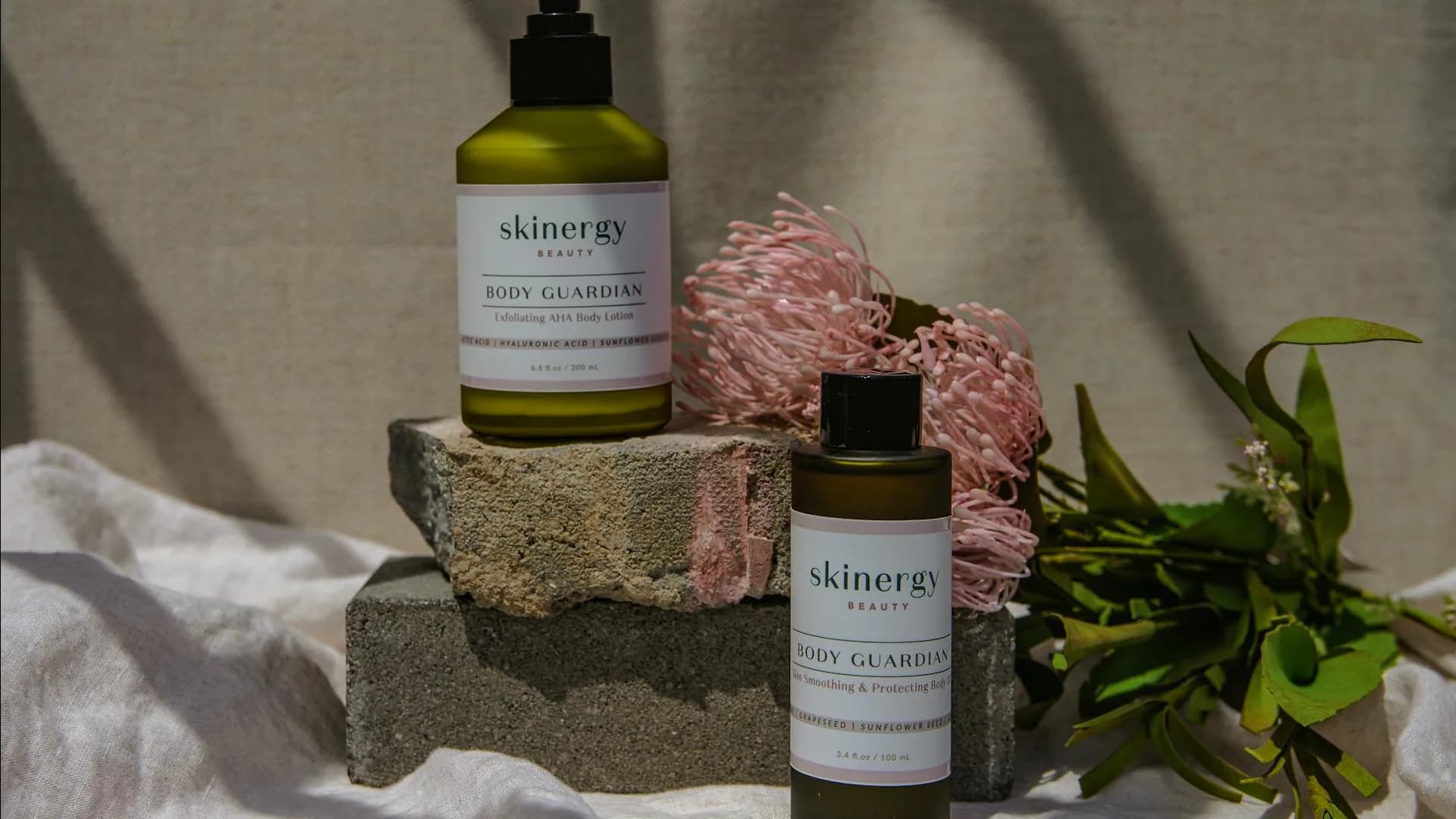
Photo: ANVA Marketing
Glycolic Acid for Body: Benefits, How to Use It, and What to Avoid
Glycolic acid is not just for your face. Used on the body, it tackles rough texture, keratosis pilaris, dark patches, and dull skin far more effectively than a scrub. Here is how to use it safely and get the best results.
What Is Glycolic Acid and Why Does It Work on Body Skin?
Glycolic acid is an alpha hydroxy acid (AHA) derived from sugarcane. It holds a key distinction among AHAs: it has the smallest molecular size of any acid in the family, which allows it to penetrate the outer layer of skin more efficiently than alternatives like lactic acid or mandelic acid.
On the body, this penetration depth makes glycolic acid exceptionally effective at:
- Dissolving the bonds between dead skin cells at the surface level
- Stimulating cell turnover so fresher skin appears faster
- Improving the absorption of other products applied afterward
- Addressing chronic roughness that scrubs alone cannot fix
Many people use physical exfoliants, loofahs, scrubs, dry brushes, on their body without seeing lasting improvement in texture or tone. The reason is that physical exfoliation removes only the topmost surface cells. Chemical exfoliation with glycolic acid works at a deeper level, breaking down the accumulated layers of dead cells that cause roughness, dullness, and uneven tone.
Key Benefits of Glycolic Acid on the Body
Quick Check
Curious if your routine matches your skin goals?
Take our 60-second skin diagnostic and get personalised ingredient recommendations.
1. Smoother Skin Texture
Rough patches on the elbows, knees, upper arms, heels, and thighs are among the most common body skin complaints. These areas have naturally thicker skin and are subject to friction, which accelerates the build-up of dead cells. Regular glycolic acid use visibly smooths these zones within 4–6 weeks.
2. Treating Keratosis Pilaris (KP)
Keratosis pilaris, those small, rough bumps most common on the upper arms and thighs, is caused by a build-up of keratin blocking the hair follicle opening. Glycolic acid is one of the most clinically supported ingredients for KP because it directly dissolves the keratin plugs and encourages the follicle to clear.
For KP specifically, look for formulations that combine glycolic acid with urea, the combination addresses both the keratin plug and the surrounding dryness that makes KP more prominent.
3. Fading Dark Patches and Hyperpigmentation
Areas prone to friction or sun exposure, inner thighs, underarms, knees, ankles, often develop darker pigmentation over time. Glycolic acid accelerates cell turnover, which means pigmented cells are shed more quickly and replaced with newer, lighter cells. Consistent use over 6–12 weeks produces measurable improvements in these areas.
4. Improving Skin Radiance
Body skin that looks dull or grey is typically suffering from a slow cell turnover rate with accumulated dead cell build-up. Even a single application of a glycolic acid body product often produces visible brightness because the light-reflecting layer of living cells is suddenly exposed.
5. Preventing Ingrown Hairs
Ingrown hairs, particularly after shaving or waxing, happen when the hair follicle opening is blocked by dead skin. Regular glycolic acid application keeps the follicle opening clear, significantly reducing the frequency and severity of ingrowns on legs, underarms, and the bikini area.
Concentrations: Which Strength Is Right for Body Use?
Concentration matters significantly with glycolic acid. Body skin is generally more resilient than facial skin but can still react if the concentration is too high for regular use.
For most people starting glycolic acid on their body, a 5–10% product used 2–3 times per week is an effective and low-risk starting point. Increase frequency gradually based on how your skin responds.
How to Use Glycolic Acid on the Body
Step 1: Cleanse First
Apply after showering on clean, towel-dried skin. Avoid applying to wet skin, the water on the skin surface dilutes the acid and reduces its contact with dead cell layers.
Step 2: Apply to Problem Areas (or All Over)
- For targeted treatment (KP on arms, rough elbows, dark knees), apply directly to those areas.
- For a full-body approach, spread across arms, legs, torso, and upper back as needed.
- Use enough product to cover the area in a thin, even layer, you do not need thick application.
Step 3: Let It Absorb
Wait 2–5 minutes before applying anything else on top. This gives the acid time to work without being immediately diluted by a moisturiser.
Step 4: Follow With Moisturiser
Always follow glycolic acid with a hydrating body lotion or cream. AHAs can be drying with repeated use, and a moisturiser applied over the top maintains the skin barrier while the acid does its work.
Step 5: Use SPF on Exposed Areas
Glycolic acid increases photosensitivity, freshly exfoliated skin burns more easily. If the areas you have treated will be exposed to sunlight, apply a body-safe SPF or protect them with clothing.
What to Avoid When Using Glycolic Acid on the Body
Do Not Layer With Other Strong Actives
Avoid applying glycolic acid immediately before or after:
- Retinol, together they can cause significant irritation
- Other AHAs or BHAs at the same time, stick to one exfoliant per application
- Benzoyl peroxide in the same session
Do Not Apply to Broken or Irritated Skin
Skip any areas with:
- Open cuts or wounds
- Active eczema, psoriasis, or dermatitis flare-ups
- Razor burn or fresh waxing, these areas are compromised and glycolic acid will sting and cause more damage
Wait at least 24–48 hours after hair removal before applying glycolic acid to that area.
Do Not Over-Exfoliate
More is not better. Signs that you are using glycolic acid too frequently:
- Persistent redness or stinging that lasts hours after application
- Skin feels tight, raw, or overly sensitive
- Increased breakouts (body acne) in treated areas
- Skin surface feels tacky or peels unexpectedly
If any of these occur, reduce frequency and increase the gap between applications. Give your skin barrier time to recover.
Do Not Use in the Sun Without Protection
Applying glycolic acid to sun-exposed areas (legs, arms, décolletage) without SPF protection significantly increases the risk of sunburn and UV-induced hyperpigmentation, the opposite of the result you are working toward.
Formats: Choosing the Right Product Type
Body lotions with glycolic acid are the easiest entry point, you apply them as your regular moisturiser and the acid works passively. Great for beginners and daily maintenance.
Body serums are more concentrated and typically absorbed faster. Better for targeted treatment of specific areas.
Exfoliating body washes contain lower concentrations (usually 1–5%) that are rinsed off. The contact time is shorter, so results are gentler, but they are an easy way to add glycolic acid to your shower routine without adding another step.
Foot and heel creams often combine glycolic acid with urea at high concentrations specifically for cracked heels and calluses, one of the most effective applications.
The Bottom Line
Glycolic acid is one of the most effective tools for improving body skin, and it is significantly underused compared to its facial counterparts. For anyone dealing with chronic rough texture, keratosis pilaris, dark patches, or dull body skin, it is a more reliable solution than physical exfoliation alone.
Start with a mid-range concentration (5–10%), apply after showering 2–3 times per week, always follow with moisturiser, and protect treated areas from sun exposure. Within 4–8 weeks, the difference in texture and tone is typically visible enough that you will wonder why you waited so long to add it to your routine.
Related Reading
Join 50,000+ beauty lovers
Enjoyed This Article?
Get our best picks, reviews, and skincare secrets delivered to your inbox weekly.
No spam, unsubscribe anytime